
Veterinarian With 20 Years Of Hip Dysplasia Cases Exposed The Hidden Reason Every Medication Eventually Stops Working
Your dog should be running right now. He's limping instead.
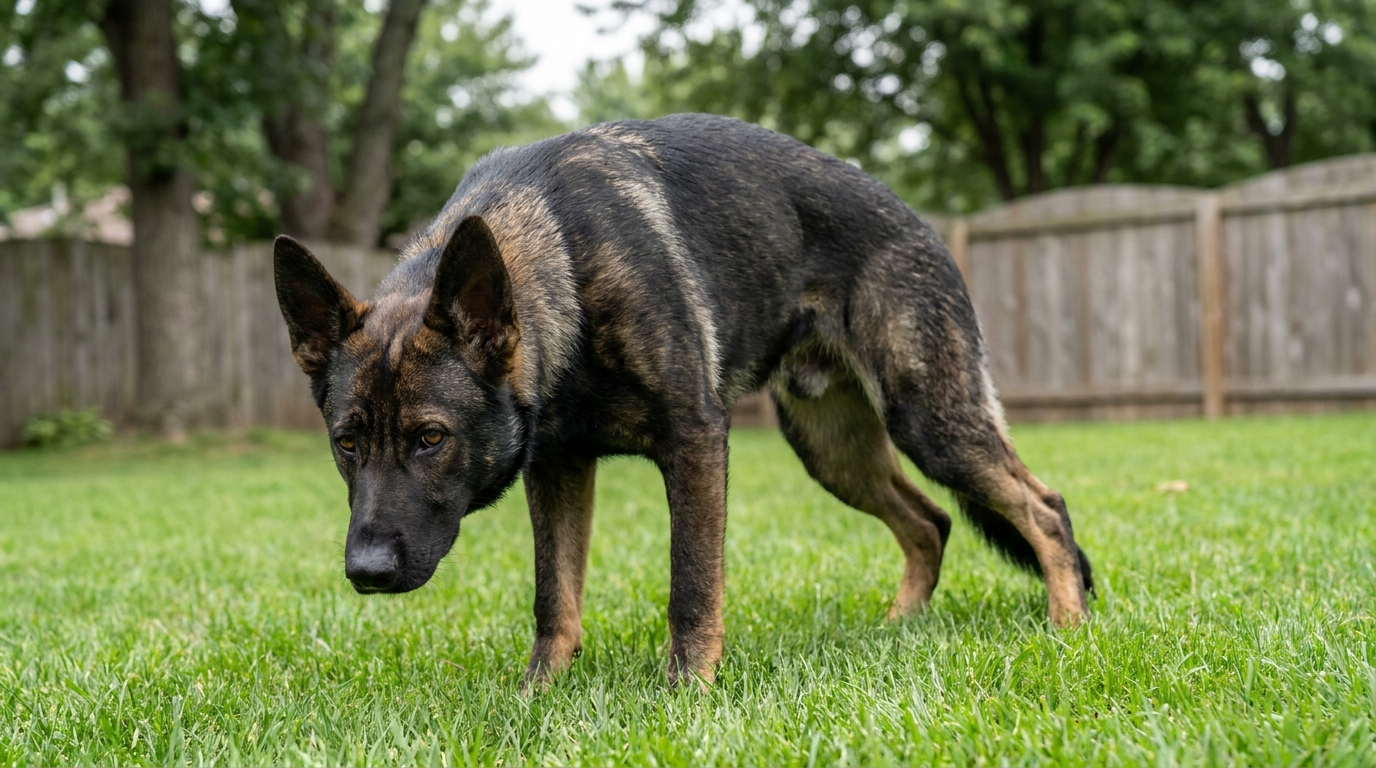
If your German Shepherd takes the stairs one at a time now...
If your Lab's back legs swing together in that bunny-hop gait that wasn't there a year ago...
If your Golden is stiffer every morning, and the stiffness lasts longer every month, and the medication that worked six months ago barely touches it now...
Then what you're about to read could change the next five years of your dog's life.
Because a quiet epidemic is destroying the joints of large-breed dogs across America. Studies suggest roughly 1 in 2 German Shepherds will develop hip dysplasia in their lifetime.
But the epidemic isn't the dysplasia itself.
It's what's happening inside the joint that no medication your vet has ever prescribed can reach.

A 20-Year Veterinarian Watched His Best Protocol Fail 400 Dogs In A Row
Dr Linda Vasquez has treated large-breed hip dysplasia for over twenty years.
German Shepherds. Labs. Goldens. Rottweilers. More than four hundred cases following the same protocol.
Carprofen. Then Galliprant when the Carprofen stopped holding. Glucosamine. Fish oil. Adequan injections. Then Librela when everything else lost the race.
Every single dog improved. Then every single dog declined anyway.
"I had six tools," Dr. Vasquez says. "And I used them in the same order, on hundreds of dogs, for twenty years. The outcome was always the same. Four months of improvement. Then the slow slide back."
The case that broke the pattern was a three-year-old German Shepherd named Atlas.
Three years old. Not ten. Not twelve. Three.
His owner Jen had picked a breeder with OFA-certified parents. Health-tested. She'd paid the premium. Done everything right.
Atlas was diagnosed at fourteen months.
Dr. Vasquez started the full protocol. Jen did everything he asked. Weight management. Controlled exercise. Hydrotherapy twice a month. Four supplements every morning.
For two years, she fought harder than any client he'd ever had.
For two years, Atlas got worse anyway.
The walks got shorter. The hind legs got thinner. The bunny-hop showed up every time he ran. The medication adjustments helped for weeks instead of months.
Then Jen asked the question that changed everything.
"Why does everything stop working?"
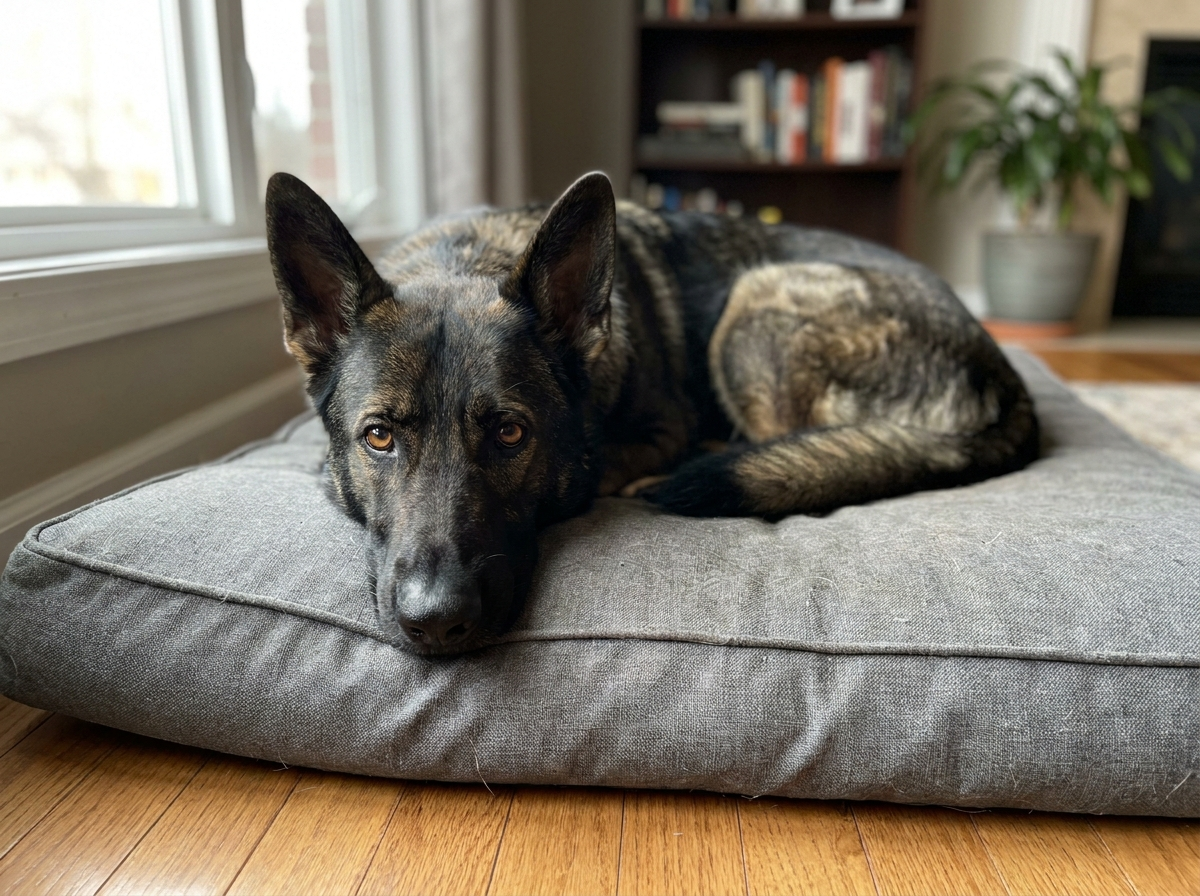
The Investigation That Kept Her Up Until 2AM
Dr. Vasquez started to give her the standard answer. Degenerative. Progressive. The nature of the condition.
Then she heard those words before they came out, and they sounded like a surrender.
That night she did something she hadn't done since vet school. She stopped reading the pharmaceutical guidelines and started reading the actual joint pathology research.
What she found made her sit in the dark for a long time.
The Hidden Reason Behind Every Failed Medication, And It's Not What You Think
Here's the 1% nobody told you.
Hip dysplasia means the joint is structurally loose. Every vet knows that.
But the dysplasia itself isn't what causes the decline. What causes it is what happens inside the joint at the cellular level.
The abnormal movement creates chronic, low-grade inflammation. Not dramatic. Not visible. Just a slow, constant fire burning around the joint 24 hours a day.
The cells responsible for repairing cartilage, chondrocytes, need energy to do their work. That energy comes from the mitochondria inside those cells.
In a chronically inflamed joint, the mitochondria begin to fail.
The cells lose power. They can't repair. Cartilage breaks down faster than it's rebuilt. The breakdown triggers more inflammation. The inflammation causes more mitochondrial failure.
The cycle feeds itself. And it accelerates.
That is why Jen's dog got worse despite everything.
Not because the disease was "winning." Because nothing she was given could reach the place where the disease actually lives.
Why Every Supplement And Medication Fails The Same Way
Dr. Vasquez went back through every tool in his twenty-year protocol. One by one, he measured each against the real problem.
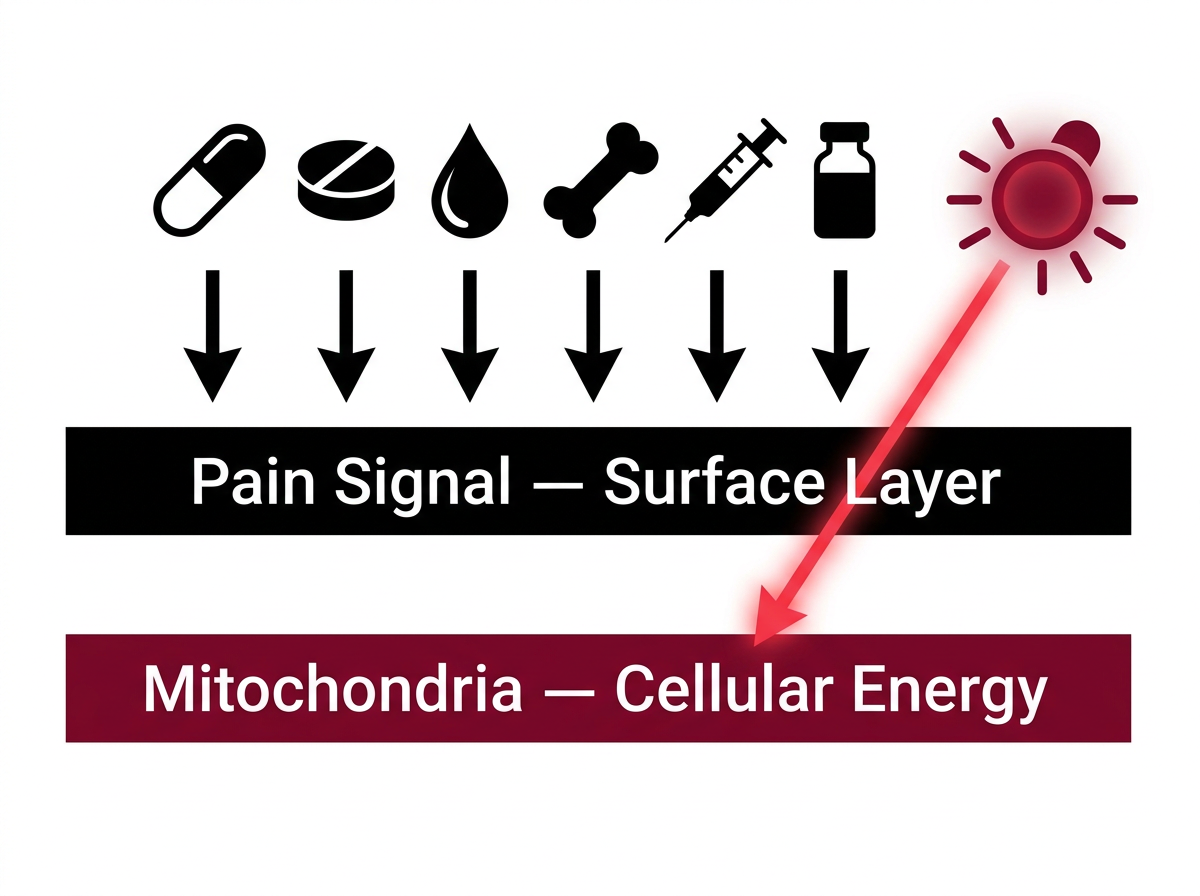
Glucosamine? Provides building blocks for cartilage. But building blocks don't help when the construction crew has no power. Doesn't reach the mitochondria.
Fish oil? Mild anti-inflammatory properties. Works on the signal, not the source. Doesn't reach the mitochondria.
Carprofen and Galliprant? Suppress the pain alarm. The fire underneath keeps burning. Doesn't reach the mitochondria.
Adequan? Supports cartilage matrix. But the cells maintaining that matrix are running on empty. Doesn't reach the mitochondria.
Librela? Blocks the pain signal. Powerful. Effective. Still treating the smoke. Doesn't reach the mitochondria.
"I had six tools on the same axis," Dr. Vasquez says. "And I never once asked why they were all on the same axis."
Six different prescriptions. One shared failure. None of them could reach the cellular engine that was actually failing.
What Rehab Clinics Have Been Using Quietly For Years
Here's what angered Dr. Vasquez most.
The solution already existed. It had been sitting in veterinary rehab clinics for over a decade. She'd been referring post-surgical patients to clinics that used it.
She just never connected it to the dogs who weren't post-surgical. The ones living with hip dysplasia every day.
Specific wavelengths of light, 660nm and 850nm, are absorbed directly by the mitochondria in joint tissue.
Not absorbed by the skin. Not scattered by the fur. Absorbed by the mitochondria themselves.
660nm calms the inflammatory environment around the joint. Not by masking the signal. By addressing the environment that's producing it.
850nm penetrates deeper into the joint tissue and supports cellular energy production at the source. The cells regain the capacity to repair.
Because it addresses the mitochondrial failure directly, it can actually break the cycle that every other treatment just manages.
This isn't new science. It isn't alternative medicine. It's the same mechanism behind the $75-per-session laser therapy that rehab specialists charge for.
One company finally made it available for home use.
Atlas Was The First Dog He Tested It On
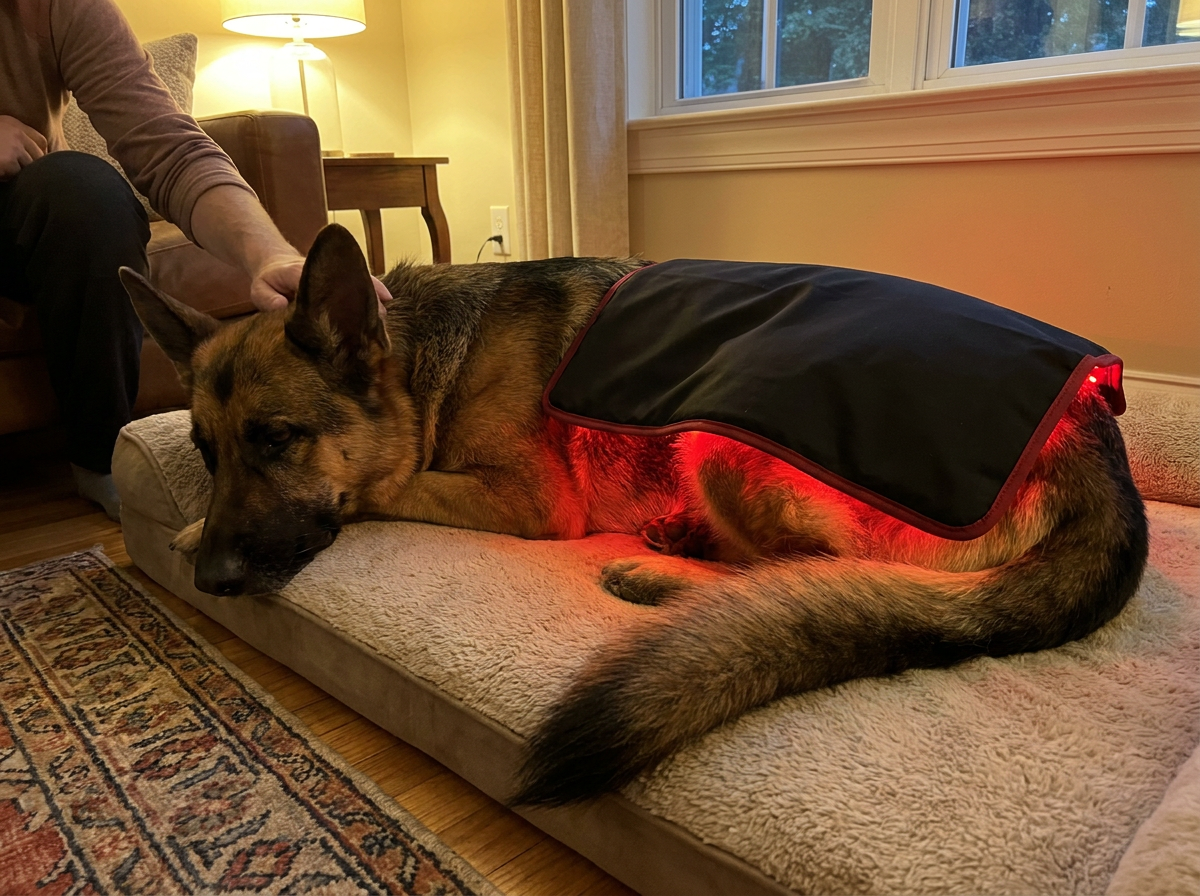
The device is called PetRevive. Medical-grade dual-chip LEDs delivering both 660nm and 850nm. Built-in rechargeable battery. Wraps around the hip instead of sitting flat on top.
Dr. Vasquez gave it to Jen before recommending it to a single client.
Week one. Nothing visible. She expected that. Cellular recovery doesn't happen overnight.
Week two. Jen texted her: "Morning stiffness is shorter. Could be wishful thinking."
Week three. Another text: "Not wishful thinking. He got up without bracing. He hasn't done that in over a year."
Week five. She sent a video. Atlas walking across the yard. Evenly. Both hind legs under him properly. Not the careful, weight-shifted walk she'd been watching for two years.
Week eight. She brought him to the clinic. Dr. Vasquez watched him move around the room.
Jen was already crying.
"He went on a twenty-minute walk yesterday. We haven't done twenty minutes since he was two."
Dr. Vasquez tapered the Carprofen over the following month. Then stopped it entirely.
Atlas, on fifteen minutes of light therapy a day, was moving better at three and a half than he had at two and a half on a full medication and supplement stack.
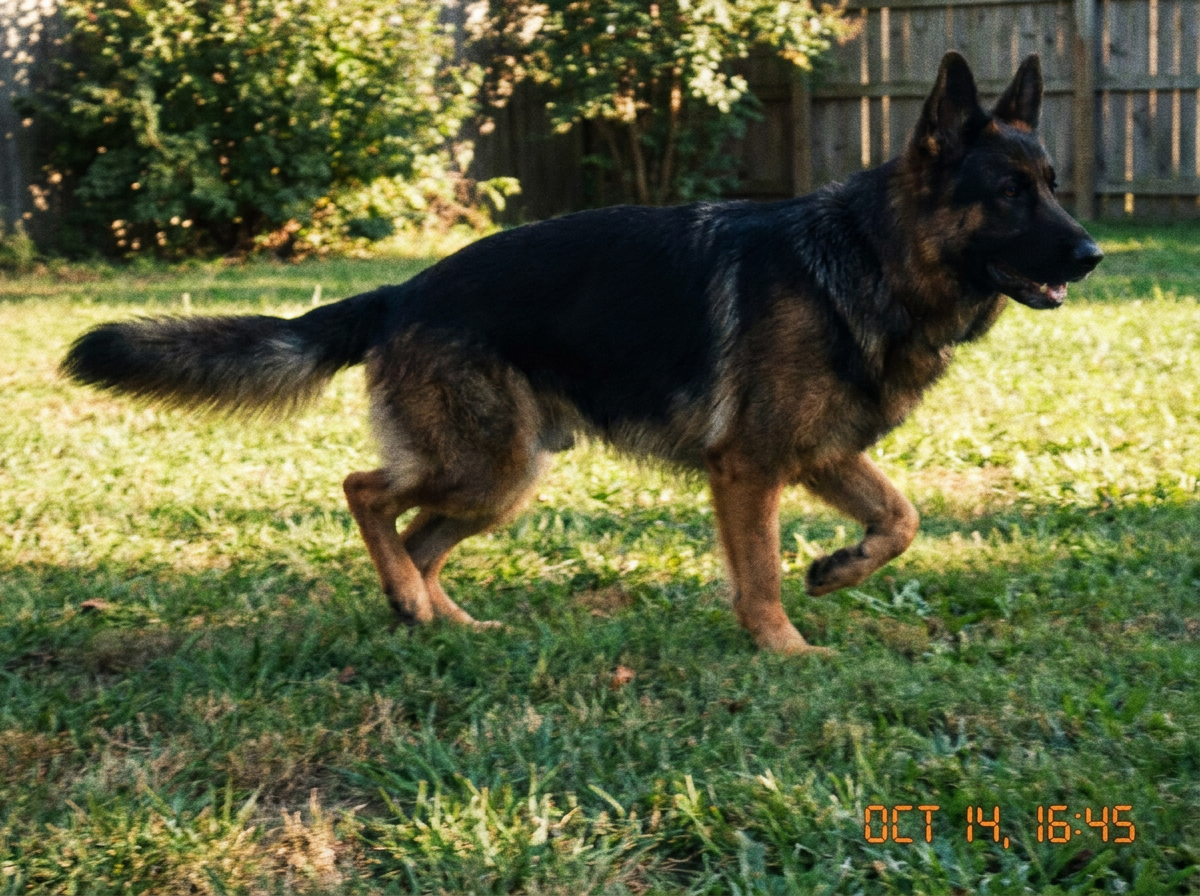
What "Normal" Should Actually Look Like
Dr. Vasquez now believes most large-breed dogs with hip dysplasia are living two to three quality-of-life years below where they could be.
Not because their vets are wrong. Because the standard toolkit doesn't include the one thing that reaches the cellular layer.
"Every dog I put on this protocol improves," she says. "Every single one. Because for the first time, something is reaching the cells that are actually failing."
That's not a miracle. That's what happens when you finally treat the fire instead of the smoke.
Paris Hilton says her Chihuahua reached the age of 23 thanks to red light therapy

Two Choices. Right Now.
You can keep managing the smoke. More dose adjustments. More supplements. More "give it time." The same six tools on the same axis, losing the same race they were never designed to win.
Or you can reach the layer they can't.
Fifteen minutes. On the couch. While he sleeps against your leg.
The cells just need the energy.
"She stopped sleeping on the kitchen tile. She's back on the bed. My side."— Maggie R., verified customer
"Three years of supplements. $4,400. Nothing did what three weeks of this did."— Rosie M., verified customer
"My vet noticed the difference before I said a word"—Karen L., verified customer
⚠️ If your dog shows sudden loss of mobility, acute pain, or inability to stand — see a vet immediately. PetRevive is daily support, not emergency treatment.